
Rethinking steam: AtmosZero’s bid to decarbonize industry
Loveland startup raises $28.5M to electrify industrial boilers with 'boiler 2.0' technology
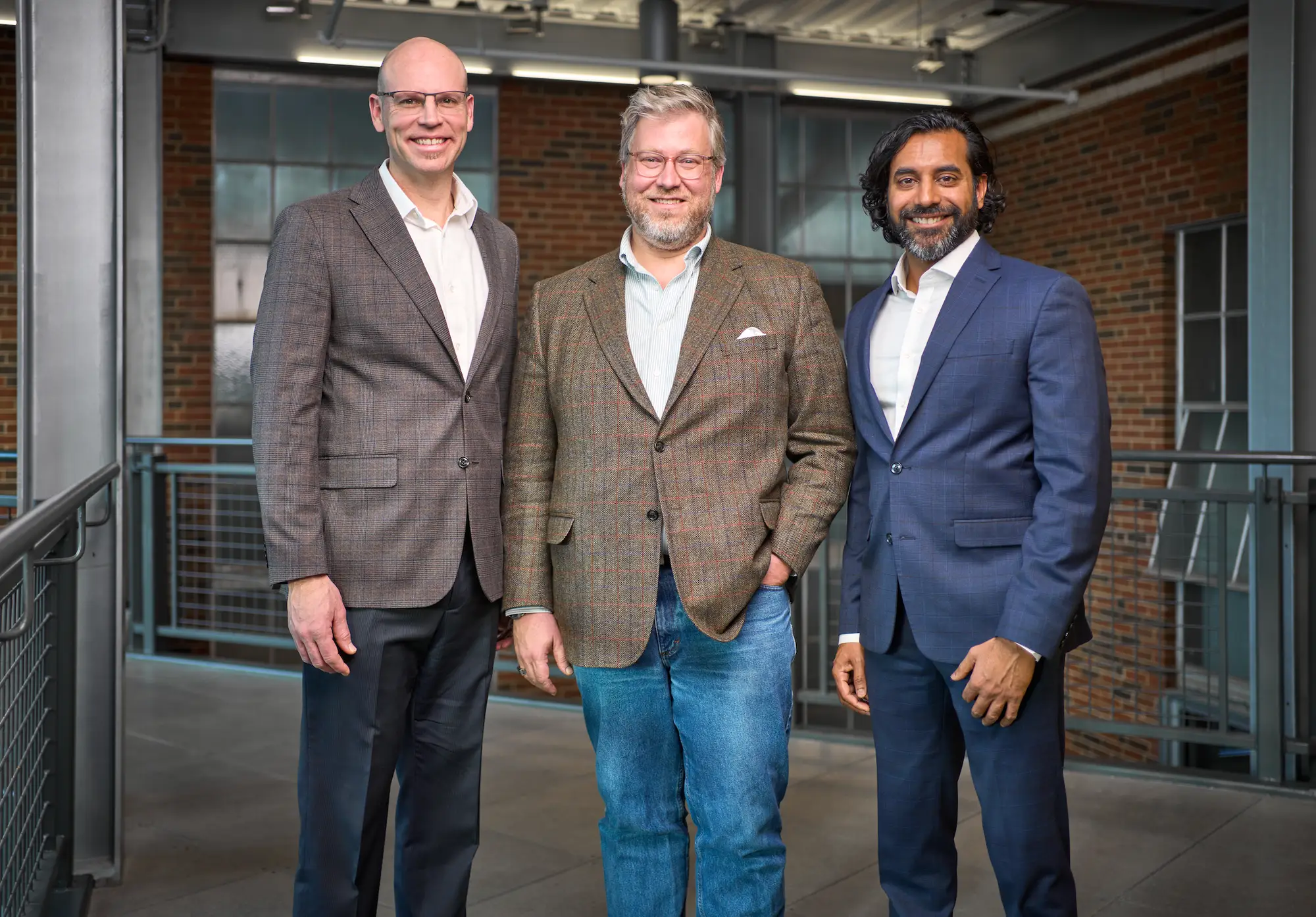
LOVELAND — AtmosZero Inc. has raised $28.5 million to date to commercialize a new approach to industrial steam production that replaces fossil-fueled boilers with electrically powered heat pump technology, positioning the Northern Colorado startup to scale deployments beginning in 2027.
The Loveland-based company, founded in 2022, is developing what it calls “boiler 2.0,” an electrified steam system designed to serve industries that rely heavily on steam, including food and beverage processing, pharmaceuticals, specialty chemicals and materials manufacturing. The company’s first pilot installation began delivering steam in 2025 at New Belgium Brewing Co. in Fort Collins.
AtmosZero’s funding includes seed and Series A rounds backed by a mix of financial and strategic investors, including Energy Impact Partners, a venture fund backed by power utilities and industrial companies, and Engine Ventures, the MIT-affiliated firm focused on hard technology. Other backers include 2150, Constellation Technology Ventures, Starlight Ventures and AENU. The company has also attracted European investors with a focus on industrial electrification.
AtmosZero in February received a $1.8 million grant from the Colorado Energy Office through its Clean Air Program for providers of industrial emissions-reduction technologies.
“We are bringing to market the most cost-effective solution to electrify the boiler,” said Addison Stark, co-founder and CEO of AtmosZero, who jokingly refers to himself as the company’s “chief boilermaker.” “We’ve leveraged heat pump technology to replace the fire in a boiler and deliver the lowest total cost of ownership over the lifetime of that system.”

Rethinking a 150-year-old technology
Steam may feel like a relic of the Industrial Revolution, but it remains a cornerstone of modern industry. According to Todd Bandhauer, AtmosZero’s co-founder and chief technology officer, steam accounts for roughly 8% of global energy consumption today.
“Steam is still used all over the place,” Bandhauer said. “Making beer, sanitizing equipment, even making things like sunscreen, it’s so ubiquitous. But the way we make steam hasn’t been reinvented in 150 years.”
Traditional industrial boilers generate steam by burning fuel to boil water, a process that produces on-site emissions and relies on combustion infrastructure. AtmosZero’s system instead uses electricity to power a high-temperature heat pump that extracts thermal energy from the surrounding air to generate steam at industrial temperatures.
“Think of it as a super-powerful heat pump,” Bandhauer said. “Instead of warming the house that you’re in, we’re generating steam on the order of 300 degrees Fahrenheit.”
Heat pumps are already widely used for residential heating and cooling, but scaling the technology to industrial steam requires extremely efficient thermal design and specialized compressor technology, Bandhauer said.
“That compressor is the engine of the heat pump,” he said. “It’s absolutely critical that it’s efficient. Almost everything else in our system is commercially available. The key is how do you organize it and focus your attention on the one key component that doesn’t exist, that you can’t buy.”
From federal research to startup
AtmosZero’s origins began with federal energy research and academia. Bandhauer is a professor of mechanical engineering at Colorado State University, and his lab is based at the Powerhouse Energy Campus, an industrial-scale research facility north of Fort Collins.
Stark previously served as a program director at the U.S. Department of Energy. After leaving government, Stark began exploring how to electrify industrial heat, which is a sector that has proven difficult to decarbonize.
“He came to me and said, ‘If we can do an air-source steam heat pump for industry, I’ll quit my job and we’ll start a company,’” Bandhauer said. “I did a bunch of math and said, ‘Yeah, we can do it, but it has to be done this particular way.’ That’s how it started.”
The company’s first prototype was developed at CSU before AtmosZero expanded into 100,000-square feet of manufacturing space at the Forge Campus, 815 14th St. SW in Loveland, which is a former Hewlett-Packard facility.
To support its manufacturing ramp-up, in 2025 AtmosZero was awarded up to $24.3 million in federal tax credits through the Qualifying Advanced Energy Project Credit, known as the 48C program. In 2024, it was also awarded a $3.2 million grant to help rapidly decarbonize the U.S. industrial sector, from the U.S, Department of Energy’s Industrial Efficiency and Decarbonization Office (IEDO).

AtmosZero’s first field deployment began operating in May 2025 at New Belgium Brewing, where the system is producing steam for brewery operations. The location, which is within a 10-minute walk from campus, offered a practical proving ground close to the company’s engineering base.
Food and beverage manufacturers are among the most promising early adopters, Stark said, because steam plays a central role in sterilization, cleaning and cooking processes. Other target sectors include pharmaceuticals and biochemicals, where steam is critical for sterile processing, as well as materials industries such as pulp, paper and wood products.
The company is also seeing interest in the built environment, particularly in older cities with legacy steam-heated buildings that could benefit from electrified replacements.
Scaling from pilots to products
AtmosZero is transitioning from pilot validation to commercial execution. Stark described the company’s early years as a “zero-to-one” phase focused on proving the technology works in the field.
“Now we’re in the ‘one-to-1,000’ phase,” he said. “This is about building a product, not a project.”
That shift includes developing manufacturing processes, building a sales organization and establishing channel partnerships similar to those used in the traditional boiler industry, which relies heavily on regional equipment representatives.
The company designs and builds its systems in Loveland and plans to begin volume deliveries in 2027. Initial production will focus on the U.S. market, with expansion into Canada and Europe expected to follow.
“We want to scale responsibly,” Stark said. “We want to be able to get to tens of units per year, then scale to the 100 units a year after that.”
Because AtmosZero’s system does not burn fuel, it produces no on-site emissions, which is an advantage in regions struggling with air quality along the Front Range and elsewhere.
“When you burn fuels, you get NOx and particulate emissions reacting with the sun and creating this low-level ozone,” Bandhauer said. “With this system, you’re not combusting anything.”
While the system’s efficiency varies with ambient conditions, Bandhauer said the heat pump has been designed to operate reliably even in cold weather.
“Our heat pump’s operating now, delivering steam,” he said. “No matter what the outside air temperature is, we’re always delivering steam.”
Bandhauer was recognized for his work last October in Time magazine as one of the 100 most-influential climate leaders in the world.
For Stark, the appeal of the work goes beyond technology or markets. “We can go out and make money in many different ways,” he said. “But solving this problem, electrifying something that has looked the same for 150 years, that’s meaningful.”
AtmosZero Inc. has raised $28.5 million to date to commercialize a new approach to industrial steam production that replaces fossil-fueled boilers with electrically powered heat pump technology, positioning the Northern Colorado startup to scale deployments beginning in 2027.

Related Posts
-

Tuesday’s Greeley City Council work session will include an update on the latest cost estimates…
-

Stillwater Ranch has grown 300% in the past three years and at such a rapid…
-
LOVELAND — After more than a decade of fishing, Loveland finally may have landed a…
-

LOVELAND — With the coming of spring, Loveland is springing forward with new residential and…
