
Miracle drugs, miracle treatments hearten cardiac patients
Weight-loss drugs help reduce cardiac events
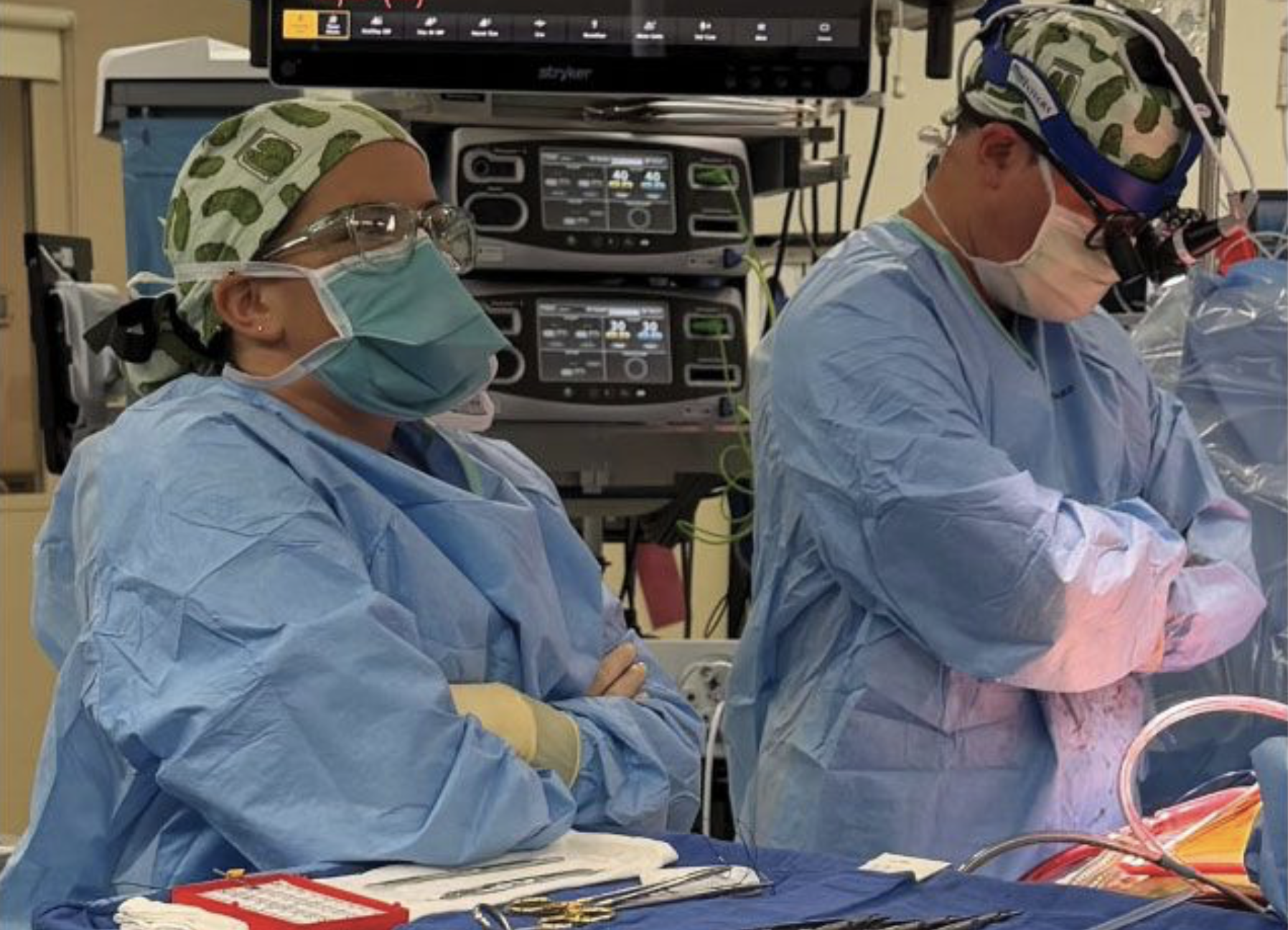
Cardiac patients who need life-saving surgical treatment can be heartened by the technological advances that let them live longer, shorten their hospital stays and resume activities more quickly.
But it may be on the prevention side of the equation where medical developments are having the biggest impact.
Yes, a couple of cups of caffeinated coffee or an occasional glass of wine aren’t likely to either help or hurt people prone to heart-related maladies. But the big impact will be coming from glucagon-like peptide-1, also known as GLP1 receptor agonists or GLP-1s.
For those who don’t speak medical talk, that’s Ozempic, Mounjaro, Wegovy, Zepbound and similar drugs designed for diabetics but with the added benefit of helping people shed the spare tire of middle age or the pregnancy weight gain the doesn’t just depart after the baby is born.
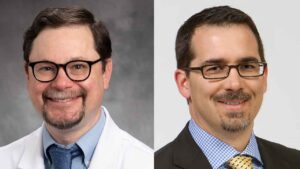
“It’s pretty profound,” said Dr. Philip Dattilo, an interventional cardiologist with UCHealth in Northern Colorado. “Data from the past two years shows consistent reduction in cardiac events as a result of these drugs — 20% relative reduction in the past year or two,” he said in a BizWest interview.
And the emergence of these wonder drugs is coming just in time. Dr. Michael Robich, a cardiac surgeon in the Banner Health System based in Greeley, said the drugs are especially important because of the change in how people encounter heart-related conditions.
“We’re seeing less heart diseases related to smoking, but we’re seeing more related to diabetes and obesity,” he said.
Nationwide, the obesity rate exceeds 40%; Colorado’s rate is less at about 25% of the population, according to the U.S. Centers for Disease Control. But the future does not look bright: 20% of children ages 2-19 also are considered obese.
“I’ve been in the business for 30 years, and in terms of impactful drugs, these are really at the top of the list. We’ve had miracle drugs, and this is one of them. I’m seeing people come in who are 60 pounds lighter and they’re a different person,” Dattilo said.
Dattilo, who specializes on the prevention side of cardiac disease treatment, said he “actively prescribes” the drugs to patients. “It took awhile to get through insurance hurdles,” he said, but now he has about 100 patients on the drugs.
“The financial issues around these drugs are major. Three years ago, there wasn’t pushback from insurers, but the number of drugs going out is causing insurers to be very strict in what they’re going to pay for. I’m seeing mostly denials at this point,” Dattilo said.
On the positive side, however, a couple of drug companies are working direct-to-consumer approaches. People can send their prescriptions directly to the manufacturer and get the cheapest iteration of the drug, which still might be $300 to $450 per month, he said.
And at this point, people who start on the GLP-1s need to continue them for life to avoid weight gain.
Still, “I’m very optimistic that the payback will be worth it to use these drugs,” he said.
Insurance companies, said both Dattilo and Robich, haven’t yet figured out the cost-benefit of interventional drugs or, for that matter, new approaches to surgery that may cost more in the operating room but reduce the time that patients spend in the hospital.
Robich cited minimally invasive procedures that are beginning to replace traditional open-heart surgery.
The newest development on the surgical side, he said, is the addition of “transcatheter approaches to the tricuspid valve” and “better transcatheter treatment of the mitral valve.”
“The real advantage is that we can offer valve replacement to people who are older and sicker than before. When it was just open-heart surgery, we’d say, ‘there’s nothing we can do’ because surgery was too high of a risk. Now, we can offer these to people who are older. Mick Jagger had a TAVR (transcatheter aortic valve replacement) a few years ago. We’re seeing people able to ride bikes at 80 and older,” he said.
The less-invasive transcatheter approaches mean that the patient will spend less time in the hospital, which reduces cost of the hospital stay.
“When you look at the cost of the valve itself with TAVR, it might be $32,000 versus $8,000 for a typical valve. When you factor in the hospital stay, it’s more comparable,” Robich said.
He said that in his recent experience, “insurance companies are allowing science to dictate. It’s quite clear that TAVR and some of these other procedures are advantageous in older people. What we don’t know is how they’ll perform in younger people,” he said.
Both doctors said they are beginning to see artificial intelligence applications in their practices.
“Cardiac surgery is extremely technical; it still requires human suturing and thousands of decisions during the surgery,” Robich said. “You have to make those decisions based on knowledge and experience.”
He said AI has made an impact outside the operating room. AI can be helpful in interpreting heart murmurs detected during diagnostic tests.
While Robich and other surgeons use robotic assistance in surgery, “we’re a long way from robots doing heart surgery. Robots aren’t autonomous; there’s a surgeon controlling it,” he said. Robots can help with movement stabilization in the hands of a trained surgeon, he said.
Dattilo said that he’s seeing advancement in preventive health because of social media. While information on the world wide web can be questionable, people are finding competent podcasters and other experts who “are helping people take care of themselves.”
Proper food and diet remain a key component of preventive care, and “that’s a super interesting and complex topic. The amount of money involved in getting you to buy the junk is phenomenal.”
Dattilo was not impressed with the new food pyramid put out in January by the U.S. Department of Health and Human Services and the U.S. Department of Agriculture. The pyramid emphasizes proteins, fats, fruits and vegetables at the top and whole grains lower in the triangle.
“There’s no good science behind that. I’m not counseling people to take up a steak and butter diet,” he said.
As with many factors, too much of a good thing can cause health conditions to swing. “I don’t think it’s a bad thing that society is moving away from alcohol, but there’s a happy middle ground. The literature suggests a J-shaped curve. Teetotalers have a slightly higher risk of cardiovascular disease,” he said.
“As with any sort of dietary data, you’re deriving it from people telling you what they eat or drink. We don’t have randomized studies of this stuff. The NIH (National Institutes of Health) could do a study, but it would take decades,” he said.
“I have this spiel: Focus on the five big risk factors of diet, exercise, cholesterol management, blood pressure and blood sugar management. These drive cardiac care and are under your control,” Dattilo said.
Cardiac patients who need life-saving surgical treatment can be heartened by the technological advances that let them live longer, shorten their hospital stays and resume activities more quickly.
But it may be on the prevention side of the equation where medical developments are having the biggest impact.
Yes, a couple of cups of caffeinated coffee or an occasional glass of wine aren’t likely to either help or hurt people prone to heart-related maladies. But the big impact will be coming from glucagon-like peptide-1, also known as GLP1 receptor agonists or GLP-1s.
For those who don’t speak medical talk, that’s…

Related Posts
-

It’s OK if you’re confused over health insurance renewal rates and plans. Too many moving…
-

Family Care Center recently opened its 18th Colorado clinic location in Louisville.
-

As marriages go, a 27-year run is not that bad. And as joint ventures go,…
-

Columbine Health Systems will host Dementia Week, a series of free events devoted to educating…
