
Manufacturers embrace growth, plan for potential downturn
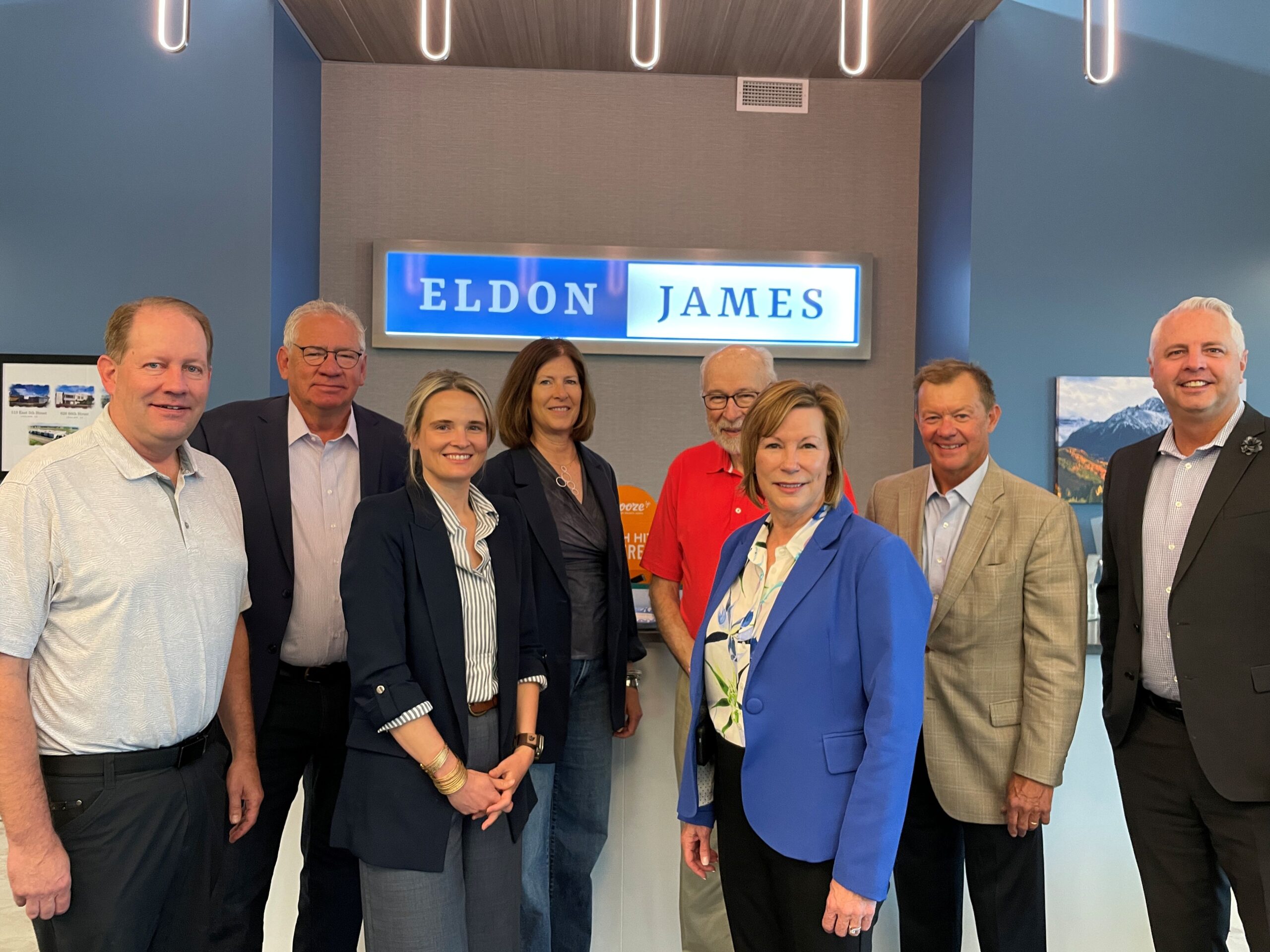
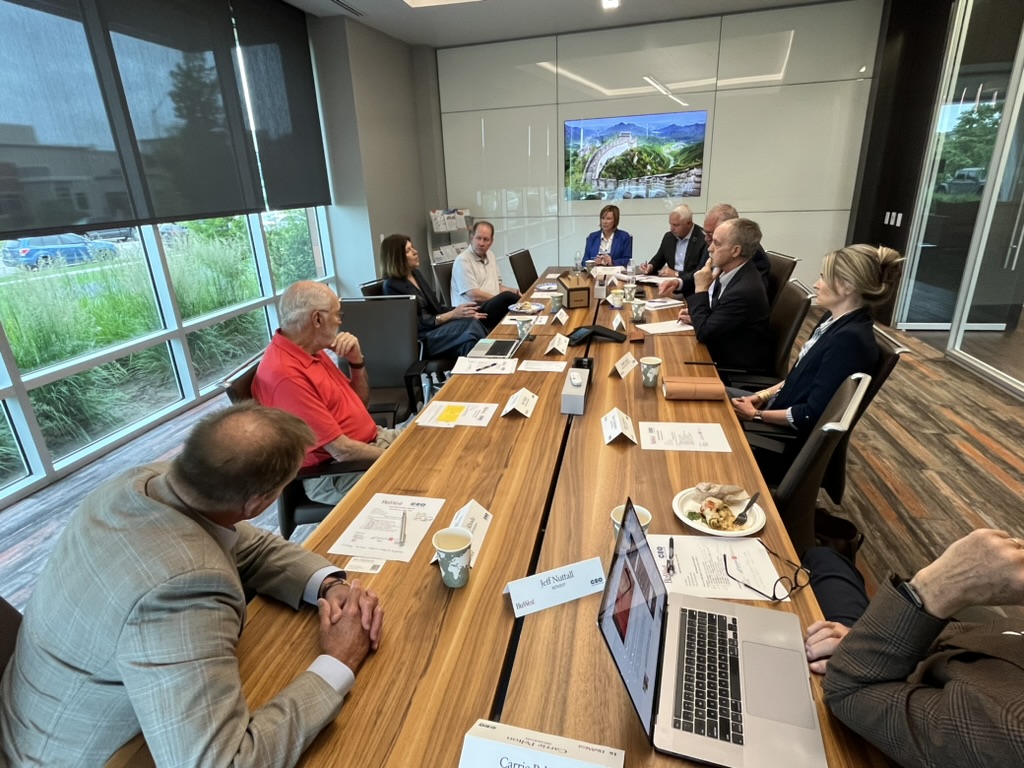
FORT COLLINS — It’s called the “dismal science” for a reason, and manufacturing executives who attended Tuesday’s BizWest CEO Roundtable held at Eldon James Corp.’s facility in Fort Collins grappled with the prospect of a major economic downturn in just a few years.
Doug Rhoda, chairman of Vectis Automation LLC, a robotic welding firm based in Loveland, raised the prospect of not a recession but of a potential depression as soon as the next decade.
Citing a report from the Institute of Trends Research, he said his company is preparing for what might be called The Great Depression of the 2030s.
That report said years of research have caused the institute to determine that five economic factors are converging and will be difficult to circumvent. Those factors are slowing population growth, rising healthcare costs, growing entitlement spending from the federal budget, inflation and growing U.S. national debt.
“It is unlikely that the 2030s depression will be prevented, as the possible solutions are far too drastic for most people to truly consider and are therefore unlikely to be brought to fruition,” the institute wrote in its report.
“For instance, one idea would be raising the retirement age to increase tax revenue, but expecting individuals nearing 80 to keep working is unrealistic. Another proposal could involve a significant shift in government structure and spending, requiring bipartisan cooperation and budget reductions.
“While there are technically feasible solutions like debt reduction and reducing healthcare spending via improved medicine, they are unlikely to be implemented due to political realities. Furthermore, any attempts to address the issue, such as tax increases, may fall short of effectively tackling the problem.”
The institute also reported that capitalistic economies are likely to come out of the depression stronger. Predicted to last six years, the depression would likely result in the United States coming out as the “strongest and most dynamic economy” in the world.
But getting through the depression will be the challenge for local companies and those around the world.
Rhoda, like every manufacturing company represented at the roundtable, reported that business prospects this year have been incredibly robust, with several citing double-digit growth in sales or orders. Rhoda said his approach to surviving the downturn will be to avoid overextending, along with seeking new customers, such as from the defense industry, that are relatively recession proof.
Marcia Coulson, CEO of Eldon James Corp., said her company saw 40% growth last year and is on pace for 30% this year. The company manufactures tubing used in medical and pharmaceutical applications. She said domestic sales and those in Europe, particularly Switzerland and Denmark, are doing well.
Having a broad customer base is an important factor for Eldon James, she said, and she recommended that companies pay down debt in the good years prior to a potential downturn while continuing to invest in staff and equipment.
Bob Walker, chairman of Walker Manufacturing Co. located in a Larimer County enclave surrounded by Timnath, said sales of Walker commercial mowers dipped in 2024 and 2025 but 2026 has seen growth. The company ramped up employment prior to 2024 to 235 workers only to see that number decline to 165 in August last year. The company is now up to 210 workers and expects to produce its 200,000th mower by Sept. 18, when it will celebrate that milestone.
Walker said being cash-rich is important to his strategy. He cited a conversation he had with an outside accountant who one time asked what the company was doing with so much cash on hand. That cash enabled Walker to survive the 2008 Great Recession while competitors were unable to sustain operations.
Jay Dokter, CEO of contract manufacturer Vergent Products Inc. in Loveland, said the company has expanded its space and has repositioned its customer base to include more-stable defense and aerospace customers. “We have a strong backlog (of orders), the best we’ve ever had,” he said. And margins are better, too, along with 28% sales growth, he said.
Dokter and his partners also own the Forge Campus in Loveland. Forge, the former 811,000-square-foot Hewlett Packard facility on 170 acres in south Loveland, is now 85% occupied by mostly tech companies. He said those 60 companies bring 1,100 workers to the campus each day with wages that total more than $110 million annually.
“Now, we’re talking about how we might expand on the land” to grow even more, Dokter said.
A Danish tenant, Multicut A/S, will soon move into the facility, add 82 jobs and occupy 35,000 square feet. Multicut is a defense manufacturer. Dokter’s conversations with company executives could result in several other companies locating operations in Loveland.
Janel Highfill, associate vice president of workforce at Front Range Community College, said companies in the region are demanding more trained manufacturing technicians. To that end, FRCC will build a new campus in downtown Longmont and expand its core capacity, she said. She listed precision machining, electronics, and quantum computing applications as job sectors that will see growth. “Robotics and automation are absolutely huge,” she said.
Front Range has programs to help companies, such as Broadcom in Fort Collins, improve the job skills of existing workers by running degree programs within the Broadcom workforce.
Tariffs
A year ago, participants at the manufacturing roundtable reported that the tariffs that the federal government had just imposed were mostly positive. While implementation of federal tariffs has been mixed because of court decisions rolling back some of them, the companies this year continued to express largely positive impacts.
Coulson said that Sweden incentivizes companies to invest in the U.S. so that they are less impacted by tariffs, and that’s been a benefit to companies like Eldon James.
“We’ve always bought as much raw materials as we can here in the U.S.,” she said.
Dokter, also, said that Vergent is still seeing positive impacts from tariffs. “It’s pushing more companies to invest in the U.S. and build their products here,” he said.
Walker Manufacturing, however, has seen negative consequences from tariffs. “We’re up 153% in what we’ve paid out in tariffs. That represents about 1% of sales. In an industry where we work at 5% net net, this is a lot,” he said.
“We’ve always tried to buy materials in the U.S., and our customers have been willing to pay a premium for U.S. made products. But some materials can no longer be bought in the U.S., he said, citing small rubber tires that are no longer available here; Walker imports them from Taiwan. Also, ball bearings “aren’t made here anymore,” he said.
Rhoda said Vectis imports its main robotic welder from Denmark but most other inputs for its operation are produced domestically, thus avoiding tariffs.
Artificial intelligence
All the manufacturers are making some use, but limited, of new AI technologies.
Coulson said Eldon James is experimenting with an AI order entry tool for routine orders.
Dokter said he’s also being careful, noting that for some functions, particularly for defense industry clients, he can’t use open AI tools. Vergent is testing an AI tool for three-dimensional inspection of circuit boards. And the company uses AI text drafting tools for documents and simple contracts. “Half my job is now answering ‘is this OK to send,’” he joked, about the need to proofread what AI might generate.
Rhoda concurred. “We’re not 100% dependent; we’re always checking. Vectis is a Latin word for ‘lever,’ and I see AI similarly. It’s a tool,” he said.
Economic forecasting, planning
Returning to the discussion about a potential economic downturn in just a few years, Rhoda said that, “We think about our little boat in the hurricane. How do we make ourselves anti-fragile. We try to find those segments to stay alive and support those (employee) families.
“The world is not a safe place; there’s a panic on the ship-building side,” he said, and Vectis hopes to tap into the defense sector.
“It takes time to earn trust, to convince people that we have the staying power, and we’re working on that now, and we’re working to make sure we don’t overextend,” Rhoda said.
Coulson said the lessons of the Great Recession in 2008 are still top of mind. “In 2008, we supplied a lot to the automotive industry. What we didn’t know was that the automotive aftermarket was going to be big because people weren’t buying new.”
She said Eldon James will be “real careful to make sure we have everything paid off, … then invest in equipment but pay cash.”
Walker said having plans is one thing, but “a person who has a five- or 10-year plan, with no reversal built in, isn’t realistic.”
Dokter said he’s going after “fairly stable markets,” such as the defense industry.
“We’re planning to keep overhead down, to increase employees and equipment to match what we think is coming from a demand perspective.”
Population
The slowing or decline in population growth, as it affects numbers of people seeking jobs, has been on the minds of all the companies.
Coulson reported difficulty in finding people, whom she said Eldon James can train for most positions.
Walker said his mower manufacturing company “is being throttled” by ability to hire. “Since August, we’ve interviewed 205 people and hired 78 of them. In the meantime, 37 have left or retired from the company.”
Rhoda said that Vectis doesn’t use search firms but has a long-time intern program that helps to fill the pipeline of technicians for the company. “There’s a lot of short-termism in industry; you have to invest early in people,” he said.
Dokter said Vergent has increased compensation, added a 401(k) retirement match and has a “healthy profit-share program” that has helped focus employees on the company’s prospects.
On the job training front, Highfill said that FRCC is “leaning into apprenticeship programs” so that students are gaining training, experience and getting paid. “Eighty percent of our students need to work while going to school,” she said.
A newly added pre-apprenticeship program is helping Front Range introduce students “to the breadth of careers available.”
BizWest CEO Roundtables are sponsored in Northern Colorado by accounting firm Plante Moran, Elevations Credit Union and law firm Berg Hill Greenleaf Ruscitti. Those sponsors were represented Tuesday by Mike Grell, Travis Thornton and Ashley Legan, respectively.
It’s called the “dismal science” for a reason, and manufacturing executives who attended Tuesday's BizWest CEO Roundtable held at Eldon James Corp.’s facility in Fort Collins grappled with the prospect of a major economic downturn in just a few years

Related Posts
-

Black Eyed Pea, the Englewood-based eatery chain, plans to open a new Fort Collins restaurant…
-
The “hot” light is on in south Fort Collins, at least when it comes to…
-

The Fort Collins Planning and Zoning Commission next Thursday will review a proposal for an…
-
Greeley-based Wing Shack will open the chain’s 16th and largest location this summer in the…
