
30,000-acre Wild Horse Refuge near Craig aims to change how mustangs are managed
Initiative of Wild Animal Sanctuary houses 300 horses
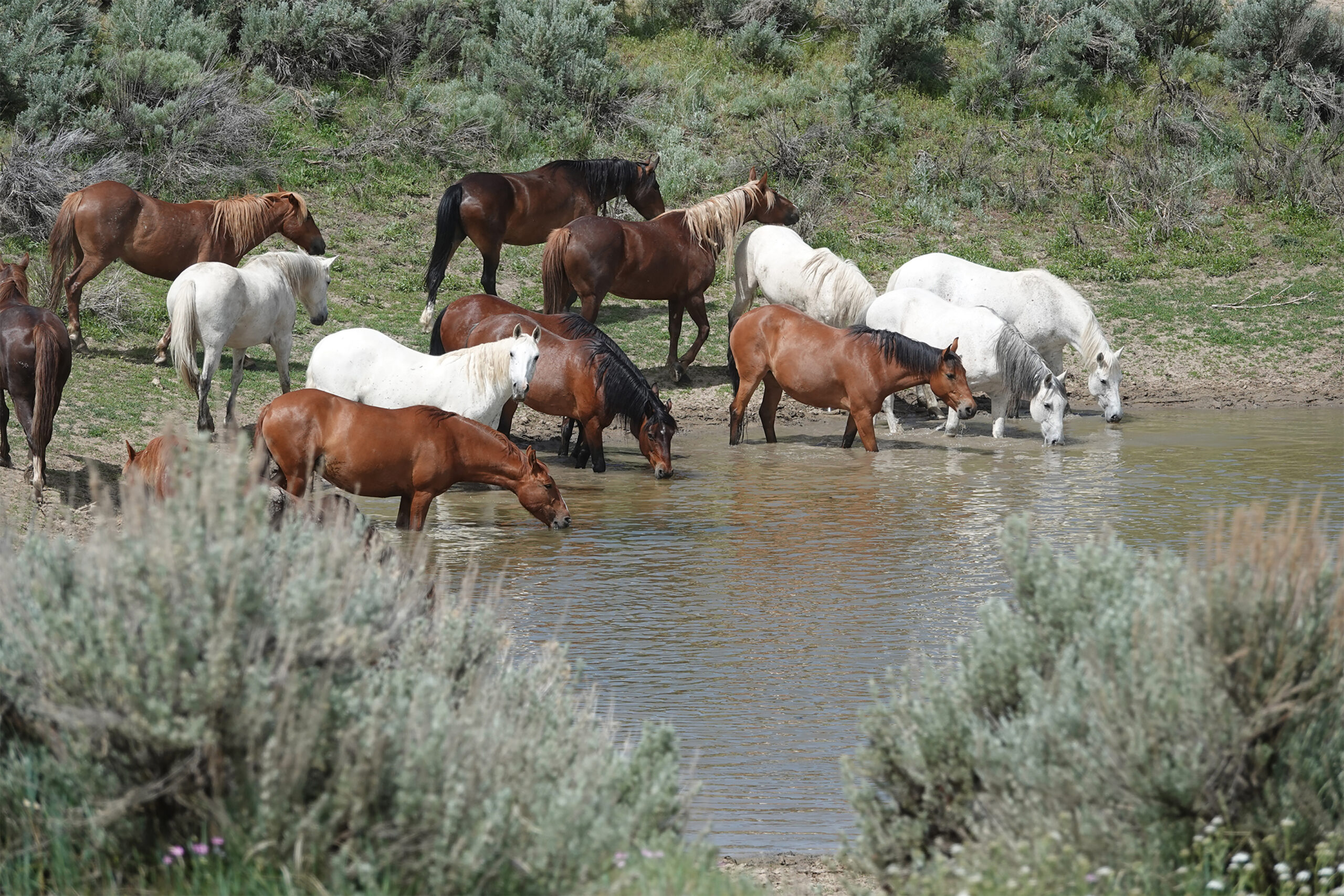
CRAIG — The Wild Horse Refuge in northwest Colorado hopes to offer a more sustainable approach to wild-horse management as mustangs are being removed from public lands across the West.
Launched in 2022 by the Wild Animal Sanctuary, the nearly 30,000-acre refuge near the Wyoming border currently houses about 300 horses, primarily from Colorado’s nearby Sand Wash Basin Herd Management Area.
The refuge was created amid growing debate over how wild horses should be managed on Western rangelands, where mustangs compete with livestock grazing and other land uses. Public opposition to helicopter roundups has also intensified as the Bureau of Land Management works to reduce herd sizes to federally established management levels.
Executive Director Pat Craig notes that wild-horse populations are at a critical juncture.
“When they get every one of the herds in Colorado down to AML, they’ll have less than probably a thousand horses,” Craig said. “At that point, having such low numbers could create a genetic shortfall in herd sustainability.”
He added: “So, managing the population numbers needs to be done in a way that will work for everyone involved. If not, wild horses may no longer exist as part of the Colorado landscape.”
From farm kid to large‑scale horse operations
Craig’s entry into mustang rescue builds on a lifetime around horses. He grew up on a small farm outside Boulder, where his family kept horses, cattle and chickens.
“I rode horses quite a bit on the farm when I grew up, so I was pretty adept at horse riding and training,” he said. “My first horse was a coming 2-year-old, and I had to train him myself.”
When Craig launched the Wild Animal Sanctuary 46 years ago, he supported the nonprofit by working other jobs. One involved buying and training young horses from local auction barns before reselling them.
In the late 1980s and early 1990s, the sanctuary partnered with a Steamboat Springs group rescuing PMU (Pregnant Mare’s Urine) horses from Canada. The effort brought dozens to hundreds of horses at a time to Colorado for care and adoption.
“They were bringing semi loads down to Colorado,” Craig said. “We were taking care of anywhere from a few dozen to a few hundred at a time. We were basically the mechanics of feeding them, keeping them healthy and helping them get adopted.”
The program gave Craig and his staff experience managing large horse populations long before the sanctuary became known for lions, tigers and bears.
Roundups create demand for new capacity
The sanctuary’s role with wild horses began in 2021, when the BLM carried out major roundups in the Sand Wash Basin. At the time, the herd numbered roughly 900 horses, well above the agency’s designated appropriate management level, or AML.
The Wild Animal Sanctuary had recently purchased a 10,000-acre property in southern Colorado to provide larger habitats for exotic animals. As media coverage of the Sand Wash roundups grew, donors and state leaders began asking whether the sanctuary could help.
“Everybody kept thinking, ‘You have 10,000 acres, you know, can you help with these roundups?’” Craig said.
The sanctuary agreed to adopt a group of Sand Wash horses as well as a herd from near Alpine, Arizona, where ranchers had begun illegally shooting wild horses on Forest Service land. But the southern Colorado property was not able to take in as many horses as needed a refuge.
“It’s very hilly and rocky,” Craig said. “It can hold horses, but not that many.”
The experience convinced Craig that the sanctuary needed a much larger ranch if it was going to provide a long-term home for Colorado horses.
Finding and financing a 30,000‑acre refuge
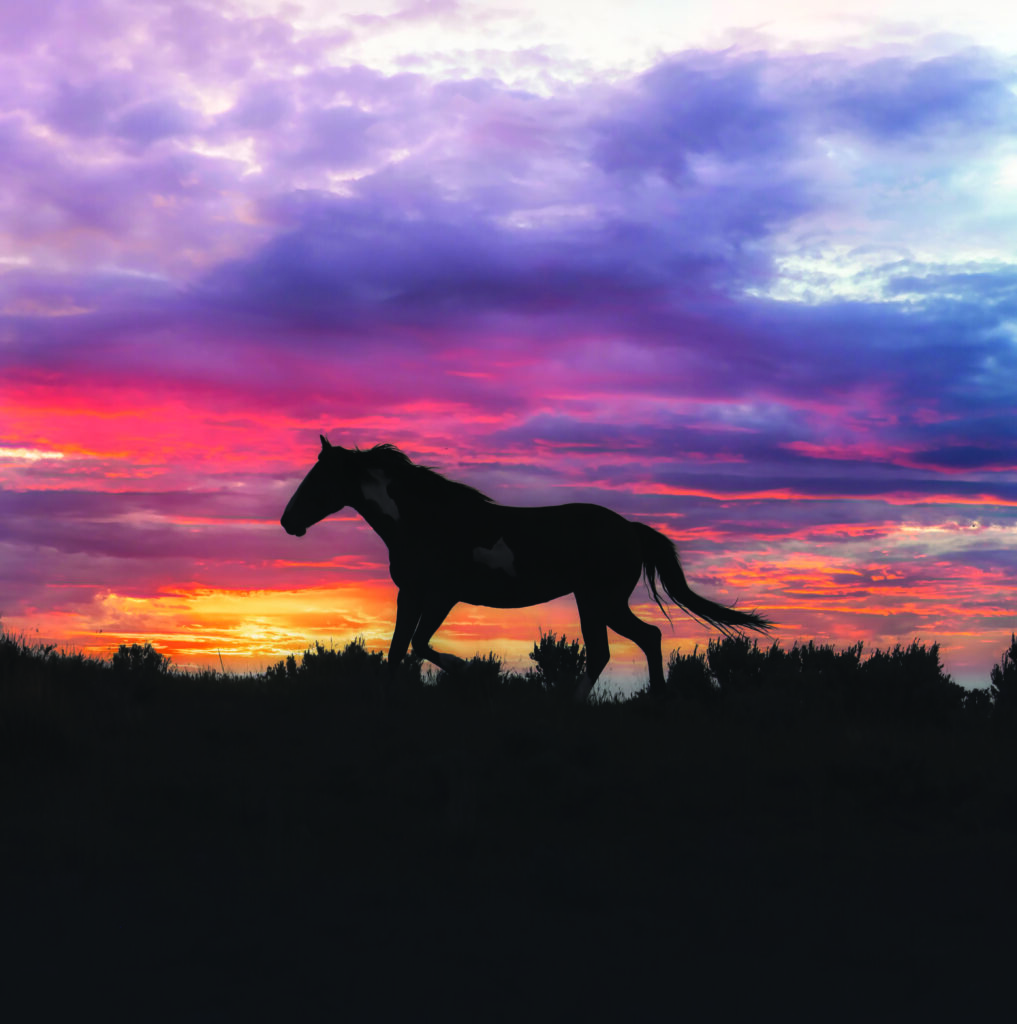
Throughout 2022, Craig toured ranches across Colorado with two priorities in mind: grass and water.
“Either you’d have good grass but almost no water, or you’d have good water but it had been overgrazed like crazy,” Craig said. “We needed both.”
The search ended near Craig, on a spread that had been in the same family for generations.
“The place was in phenomenal shape,” Craig said. “It had a ton of water and had been grazed for almost nothing, just a little here and there, so the ecosystem was in amazing shape.”
The sanctuary closed on about 22,000 acres in early January 2023, then expanded the holding to roughly 30,000 acres by purchasing adjoining parcels.
The ranch cost approximately $13 million, and then the sanctuary put in an additional $1.5 million into infrastructure and over two million in fencing, so far.
“For the first 30‑some years of running the Wild Animal Sanctuary, banks wouldn’t loan to a small nonprofit,” he said. “I had to borrow money as an individual, get land for the animals, and then deed it over once it was paid for.”
For the wild‑horse ranch, Craig said, the sanctuary’s size and track record allowed it to secure an agricultural loan directly to the nonprofit rather than relying on personal borrowing.
To pay down that debt, the sanctuary is using a founder‑acre program similar to the one that funded its southern Colorado refuge. The approach grew out of a data-driven shift in the sanctuary’s fundraising strategy.
Years ago, a volunteer helped analyze the sanctuary’s donor base and identified a core demographic of highly educated women over 45, many with graduate degrees.
With that insight, the sanctuary shifted from small fundraising events to targeted outreach, media and advertising. Annual revenue has since grown from about $2.5 million to between $35 million and $38 million, Craig said.
“We have little kids bringing in their piggy banks and dumping out pennies and a lot of other people who support us,” Craig said. “But our real core, the ones who bring in the most support, is still that same demographic.”
That base allowed the sanctuary to test the founder‑acre concept on the roughly $10 million canyon property in southern Colorado, where the per‑acre cost came to around $777.
“We did a founder program where people could buy an acre of land and then give it to the animals,” Craig said. “Within about two-and-a-half years, that property was paid off. People really resonated with the idea of getting land and giving it to the animals.”
The Wild Horse Refuge is following the same model. Donors can fund acres that help pay down the agricultural loan, a process Craig expects will take another four to five years.
Wild grazing versus warehousing
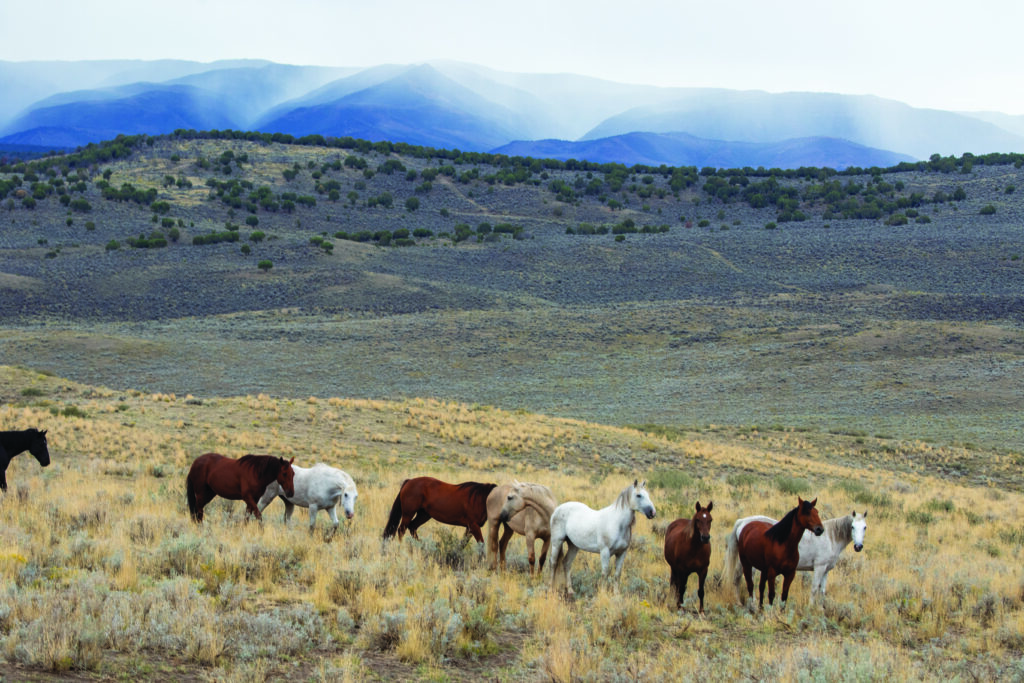
From the outset, Craig said the goal was to base herd size on what the land could support through normal years and drought rather than simply “filling up” the ranch.
The sanctuary hired three independent range specialists to evaluate forage, water and carrying capacity using the same animal-unit metrics applied to cattle operations. Their assessments suggested the ranch could conservatively support about 350 horses, with room for more as managers continued annual monitoring.
“The first time I went out to Sand Wash, I was walking around a 50-foot area and saw maybe one blade of grass,” Craig said. “At our place, you’re walking on grass. We put 300 horses on 30,000 acres and you can’t even tell they’ve grazed anything.”
A central design principle is that the ranch operates without routine supplemental feed.
“We want to make sure that we’re not in the warehousing business, that they get to do what they did in the Sand Wash Basin,” Craig said. “If we’re going to do this, we want to make sure that we’re not supplementing food for them.”
While federal estimates vary, wild horses kept in long-term holding can cost tens of thousands of dollars per animal over their lifetimes. Craig said that even after accounting for land acquisition and infrastructure costs, keeping horses on grass can be less expensive over their lifetimes than housing them in holding facilities.
While the refuge’s range-management model is relatively straightforward, building and operating it has proved more complicated.
The ranch includes several BLM parcels and grazing leases within its boundaries, requiring the sanctuary to navigate overlapping federal rules governing wild-horse adoptions and land management.
For example, the refuge ran into different fencing standards when it needed to replace aging fences. Adoption officials require six-foot fencing around wild horses, while range and wildlife staff generally prefer lower, wildlife-friendly designs.
Craig said the sanctuary eventually found a design that satisfied both requirements — spending $2 million on new fences so far — but the experience reinforced how administratively complex wild-horse management can be.
“These are supposed to be the easiest ones to care for, and by far they’re the hardest ones to care for, just because of the rigor of rules,” he said. “The horses are actually more complicated than the wild tigers.”
Early on, Craig and his staff found that wild mustang adoption rules made it difficult for a single organization to take responsibility for large groups of horses.
“Their adoption program was set up so you could get one horse at a time and up to four horses per person,” he said. “We were there to help a bunch of horses, and that made it pretty complicated.”
Over time, the sanctuary and the agency worked out a more streamlined approach so the refuge could rescue more horses from federal holding pens.
“They might bring 30 or 40 horses to an adoption event,” Craig said. “Maybe 15 or 20 would get adopted and the rest would just have to go back to the facility. Rather than taking them back, we said, ‘We’ll take everything that’s here so you don’t have to.’”
A federal incentive program offering $1,000 per adopted horse also attracted buyers who would keep the horse for the required period of time then send them to a local livestock auction where horse meat buyers are usually ready and waiting.
“We wouldn’t compete with anybody we thought was a legitimate adopter,” Craig said. “But if we thought someone was a kill buyer or was planning to use the horses for profit, we would bid against them.” He added that people trying to use the horses for profit will rarely go over the bid starting level, which is $125.
Colorado as a test case
In 1971, after a national campaign led by Velma “Wild Horse Annie” Johnston and millions of letters from schoolchildren, Congress passed the Wild Free-Roaming Horses and Burros Act, assigning management of wild horses on public lands to the BLM and U.S. Forest Service.
Before those protections, mid-20th-century slaughter operations had removed millions of horses from the West, supplying meat to international markets and ingredients for dog food.
Since then, horse numbers on the range have declined. Some herd management areas have been reduced or eliminated, particularly on public lands also leased for cattle and sheep grazing.
Craig estimates that Colorado currently has 2,000 to 3,000 wild horses within official herd management areas, with additional mustangs in adjacent areas and across state lines.
“I really think our model could be done on a national basis and provide three to four times as much space for the horses as they currently have,” he said. “Easily.”
Colorado, he argues, is a natural place to try.
“I go to every state in the country to rescue animals, and Colorado is definitely one of the most conscientious. That’s why we’ve been able to do so well here,” Craig said. “The horses are every bit a part of Colorado, and I’m glad people care enough to want to save them.”
The Wild Horse Refuge in northwest Colorado hopes to offer a more sustainable approach to wild-horse management as mustangs are being removed from public lands across the West.
Related Posts
-
Colorado Horse Rescue CEO Katherine Gregory has been appointed to the American Horse Council Board…
-
Editor’s note: Each month, Social Venture Partners Boulder County produces a Nonprofit Spotlight to highlight…
-

BOULDER — Backpacker’s Pantry, a family-owned maker of gourmet adventure meals, donated more than $112,000…
-
BOULDER — Chick-fil-A has donated $250,000 to two Boulder Valley nonprofits through the company’s True…
