
Resources dwindle for homeless youth
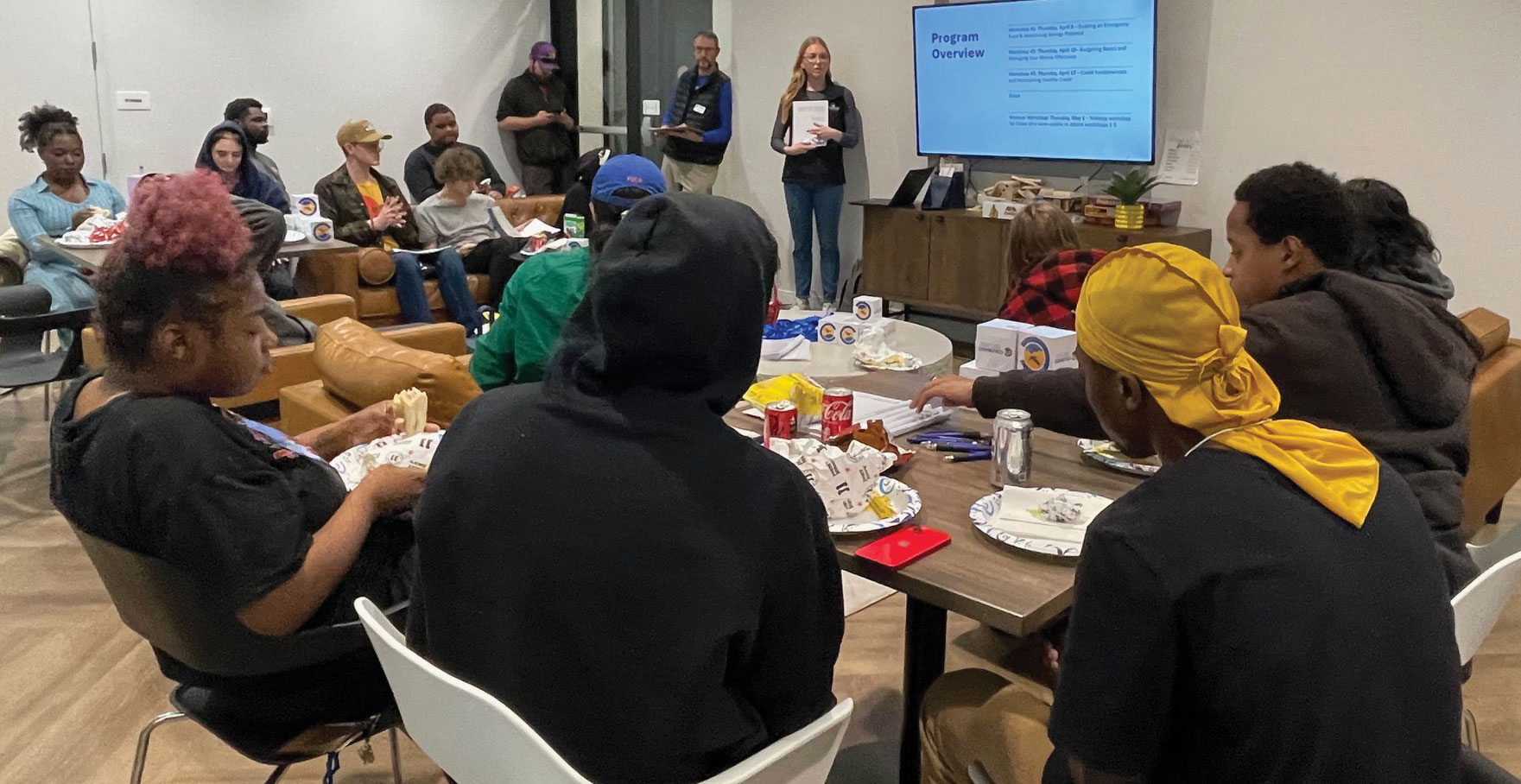
Boulder County’s homeless youth have fewer resources this year than they did in the past due to the closure of The Source, a 14-bed youth shelter run by nonprofit TGTHR, in May and the Sept. 19 closure of Chase House, an eight-bed residential treatment program that served youth ages 12 to 18.
“The youth-homelessness issue can be less-visible in a community, especially in Boulder, than the adult homeless population,” said Annie Bacci, CEO of TGTHR.
The biggest reason is that “in most places, the majority of the homeless population is part of that community,” Bacci said. “Youth move very fluidly throughout the entire metro region. They are extremely resourceful and know where they can find access to services.”
Because kids have access to free public transportation, they aren’t limited to accessing services in the communities where they grew up but can instead move throughout the Denver metro area. In Boulder, the library serves as a safe public space where homeless teens can go to be warm or cool, depending on the weather. At night, many of them ride the train to Denver International Airport, where they can blend in with travelers and get a good night’s sleep with access to restrooms.
Boulder’s homeless population became more visible in the early 2000s, in part because of high housing costs, prompting many businesses in the area to want to partner with organizations such as TGTHR, which have tried to mitigate the situation with outreach programs, behavioral health services, employment opportunities, food and shelter.
During the pandemic, Boulder businesses were hit with a double whammy: downtown activity came to a standstill, and the homeless population increased and became more visible, making “it really hard for businesses to want to get behind the issue,” Bacci said.
That has caused general fatigue and frustration among business owners who feel that they have been supportive and tried to help the issue, but it hasn’t improved, she added.
“In our work at TGTHR, we try to focus on how supporting youth homelessness is an upstream solution. If we can intervene with young people now and help connect them to housing, services, employment, benefits, and especially support around behavioral health, we can change their whole trajectory and keep them from experiencing homelessness as adults.”
Gressa Doty, vice president at Moxie Sozo, an independent brand strategy and design firm in Boulder, has been involved in the agency’s pro bono support of TGTHR, including its quarterly volunteer events at the shelters, cleaning, painting, decorating for the holidays, making sandwiches for street outreach teams and organizing clothing donations.
When Moxie moved to its current location at Broadway and Marine Street, there were homeless encampments over the fence. Shortly after its move, employees heard screaming out front that somebody had overdosed and someone was calling for Narcan.
“EMS arrived right away and were able to resuscitate the patient. It was an immediate reminder of how necessary this work is and how it impacts all of us,” Doty said.
Businesses get nervous when homeless camps pop up, she said. “There are safety concerns. If people are under the influence, they can be unpredictable. Even if you try to help by bringing out food, that is not always well-received, either. [Businesses] want clientele to feel comfortable coming through their doors,” she said.
The Source closed after a state licensing audit discovered that it was out of compliance with employee background checks and qualifications, and the cost of keeping Chase House open was astronomical when it came to the number of youths it could actually help during the year. Each facility costs around $1 million to run annually, Bacci said.
The Source would often see more than 100 teens a year in the shelter, but drop-in and outreach services typically help between 200 and 300 annually. Chase House, which has fewer beds, served around 20 youth last year, Bacci said.
TGTHR also operates 1440 Pine Supportive Housing, a 40-unit affordable-housing complex for young adults, ages 18 to 24, and Nest56 Supportive Housing in Denver, a 56-unit affordable housing complex for 18-to-24-year-olds with a history of homelessness.
For The Source, TGTHR mostly relied on a government grant that didn’t cover most of the costs, she said. The rest of the funds came from fundraising and donations.
“To reopen, we would need community funding,” Bacci said. “One-time funding is not real funding when starting a program that is indefinitely going to support young people every day. Most of our funding needs revolve around direct supportive services, case management and services for youth. When you look at our housing, we have funding for bricks and mortar and rent subsidies, but we don’t have funding for ongoing services. That is a gap we want to fill.”
She added that it is hard for people to understand that nonprofits have funding for a specific purpose and it is restricted to that purpose.
“If you close one program, you can’t move the money to somewhere else,” she said.
As part of the closure of the two youth facilities, TGTHR also had to pause its drop-in and street-outreach programs until it could figure out where the funding would come from. It has since announced that it will restart outreach in the next couple of weeks.
The point of outreach is to build relationships with young people, so they feel comfortable coming to TGTHR facilities to get the help they need, whether that be supplies, food, referrals to housing or employment.
Megan Newton, the City of Boulder’s homelessness policy adviser, said that the closure of The Source left a gap in the city’s ability to serve the homeless youth population. TGTHR has been connecting this population with youth shelters in Loveland and Denver.
TGTHR is “trying to do outreach for youth and are working to bring that back,” Newton said. “They are looking to use space inside their permanent supportive housing where youth could access services, navigation services to get into housing or other services they need.”
Boulder and surrounding communities, as well as TGTHR and All Roads, the organization that runs the adult homeless shelter in Boulder, are all being affected by cuts in funding.
“They receive their funding to do this work from a patchwork of sources, and what we are seeing now is that patchwork of sources is changing, being interrupted both at the federal level and the state level which is also impacting resources at the county level as well,” said Kurt Firnhaber, director of Housing and Human Services for the City of Boulder.
“Our federal funding at the HUD level is flat and not increasing. That is having an impact, and even the types of services that may have been provided earlier are also at risk. So, I think one of the messages I would have is that we as a community and community members need to do what they can to support and ensure critical services like TGTHR provides,” he added.
The city is confident that TGTHR will be able to continue serving young adults at its permanent supportive housing and offering outreach, but the facilities they did close “really take resources larger than we as the city can fully support,” he said.
Boulder County homelessness
Boulder County is investing $18.2 million in homeless services in 2025. That includes $8.3 million for housing and supports, $5.3 million for crisis response such as emergency shelter and street outreach, and $4.2 million for prevention, said Heidi Grove, division manager over the division of homeless systems and coordinated response in the Boulder County Housing Department.
“At the county, we do support a lot of local nonprofits for homeless youth and on the single adult side. We contract that out with service providers and also on the family side. Our supportive-housing team does support those transitioning from homelessness internally,” she said.
In 2024, TGTHR served 200 to 243 youth experiencing homelessness in Boulder County, and 282 young people used drop-in services. Sixty-seven of those were outreach targets.
According to the Metro Denver Homeless Initiative, 3,023 people accessed homelessness services in Boulder County in 2024, 2,175 who were sheltered, 706 who took advantage of supportive services, 1,011 who were unsheltered, and 167 who found permanent housing. Of those homeless, 4.3% were 0 to 17 years old, and 9.3% were between 18 and 24 years old.
“A high percentage of adults experiencing homelessness, experienced it as a child or youth, so I think breaking that cycle of homelessness when you can, breaking it at the youth level, has a significant impact and that is partly why the work of TGTHR is so critical for our community,” Firnhaber said.
“Homelessness is a housing problem. Full stop,” Bacci said. “There’s a lot of intersectionality and complexity that goes along with that: the child-welfare system, foster-care system. Behavioral health is present. There’s a lot of experiences of trauma. But, at the end of the day, when you see cities like Denver where housing costs keep increasing and more people are falling into homelessness a month than are able to exit homelessness” it is “really a simple math problem at the end of the day. Boulder is not unique. It is a very expensive housing market. Those things are directly correlated as you see homelessness increase. Unsheltered homelessness is tied to that as well.”
Overall, the city of Boulder has seen a reduction in its unsheltered homeless population over the past couple of years, Firnhaber said, which is something other communities have not experienced.
“We are encouraged by that, but we are also quite concerned about the overall landscape of homelessness which impacts the city of Boulder, as other communities will have similar funding challenges,” he said. “Boulder doesn’t sit on an island, and we are impacted by homelessness in Denver, Aurora, Colorado Springs and outside of the state. And so while we may make good progress, that’s something we generally have concern about as well.”
Funding cuts
Grove said that Boulder County hasn’t seen any direct results from federal cuts to safety-net programs or executive orders yet.
“It’s too early to know. We do keep a close eye on what’s going on,” Grove said. “HUD’s funding remained flat for this year. We just don’t have enough information yet to decipher how impactful that will be. Policy changes do have an impact, but how they will shake out, we are not there yet,” she said.
The county has seen an increase in local coordinated entry data for the homeless population.
“When there is no access to affordable housing, homelessness rises in parallel,” Grove said.
Jim Williams, strategic communications manager for Boulder County Human Services, said that the Boulder County Housing Authority and Housing Department are tied to the work of the Human Services Department in Boulder County.
“There’s a lot of collaborative effort across departments to ensure early intervention work and prevention work is getting to the folks at risk, so we’re talking about food access through SNAP, health coverage through Medicaid or Connect for Health Colorado,” he said.
Grove added that Colorado is in the perfect storm right now with inflation, a lack of affordable housing and wages that haven’t kept up with costs, which is putting a heavy burden on households across the region. As funds go away, the homeless situation will continue to be a challenge.

Related Posts
-

FORT COLLINS — Rocky Mountain Pipeliners Club hosted its eighth annual clay shoot on Sept.…
-

Ent Credit Union has awarded $250,000 to 77 Colorado nonprofits as part of the credit…
-

Colorado Youth Outdoors’ NoCo Winter Wonderland drive-through Christmas display is going green.
-

Hope House Northern Colorado has been awarded a $10,000 grant from the Littler Youth Fund…
